

The Ultimate Guide to Cyber Security Basics for Beginners
Why Cyber Security is the Most Important Business Decision You’ll Make in 2026
Cyber security is the practice of protecting your systems, networks, and data from digital attacks, unauthorized access, and damage. Here’s what you need to know at a glance:
- What it is: Tools, processes, and policies that defend your business from hackers, malware, ransomware, and data theft
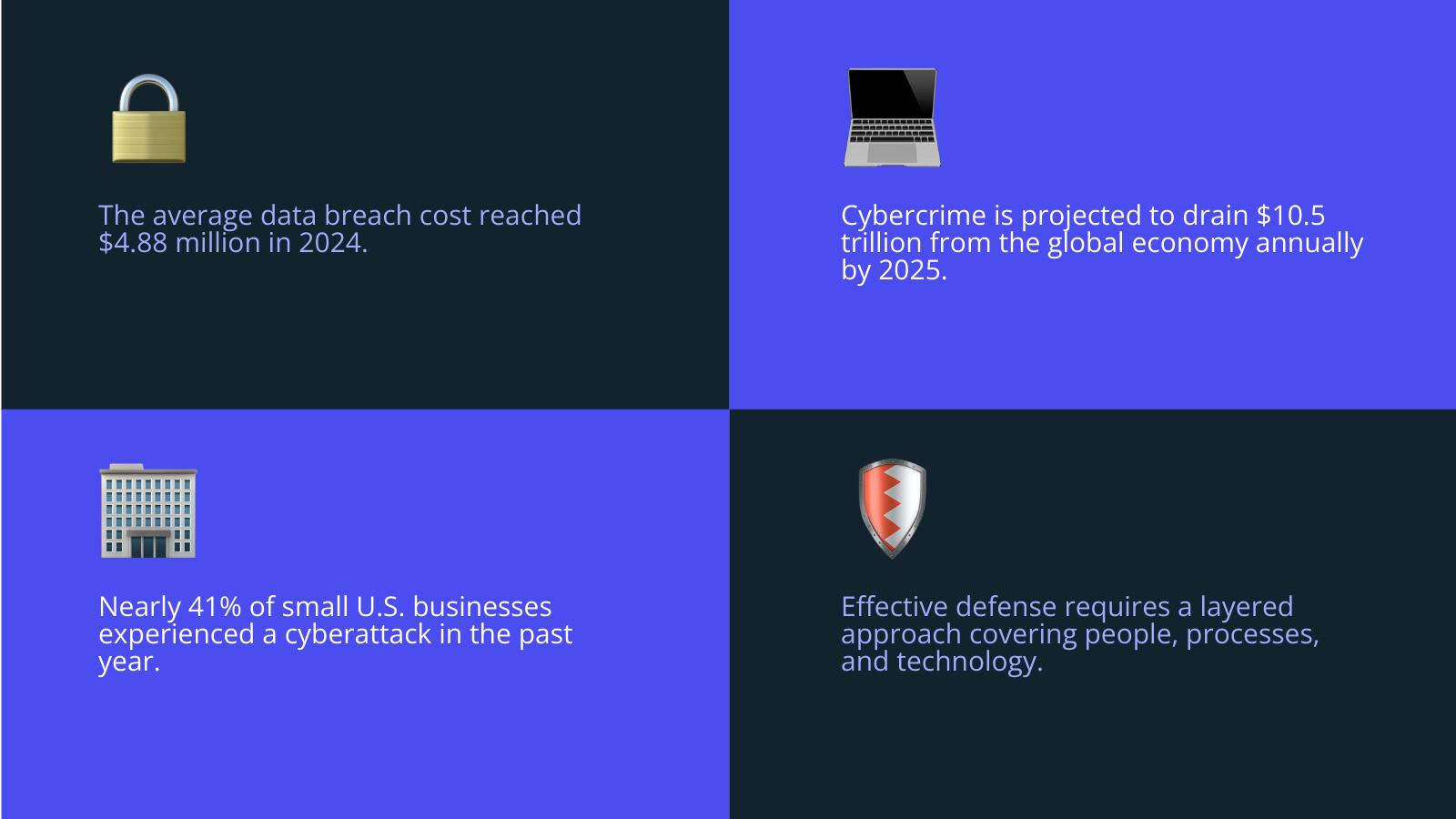
- Why it matters: The average data breach now costs $4.88 million, and cybercrime will drain $10.5 trillion from the global economy annually by 2025
- Who is at risk: Every business — including yours. Nearly 41% of small U.S. businesses were hit by a cyberattack in the past year alone
- How to defend yourself: A layered approach covering people, processes, and technology — guided by proven frameworks like NIST
This guide covers everything a business owner needs to understand about protecting their company — from the basics of what cyber threats look like, to the frameworks federal agencies use, to the tools and best practices you can put in place today.
I’m Roland Parker, Founder and CEO of Impress Computers, a managed IT services and cyber security firm that has been protecting Houston-area businesses across manufacturing, construction, banking, and professional services since 1993. I’ve also written extensively on this topic in my Amazon best-selling book Exposed & Secure: The True Cost of Cybersecurity Inaction, so everything in this guide is grounded in real-world experience — not just theory.
What is Cyber Security and Why is it Critical in 2026?
To understand how to protect your organization, we must first establish a clear definition. According to What is cybersecurity? – Cisco, cybersecurity is the practice of protecting systems, networks, and programs from digital attacks. These malicious operations typically aim to access, alter, or destroy sensitive business data, extort money from owners, or completely disrupt daily operations.
While the terms are often used interchangeably, there is a distinct difference between cybersecurity and broader Computer security. Computer security is a subdiscipline within information technology that focuses on the physical and digital integrity of standalone systems, whereas cybersecurity specifically addresses external, network-connected, and internet-exposed threats.
For executive leadership, understanding this distinction is no longer just an IT concern—it is a fundamental pillar of corporate risk management. The financial consequences of ignoring this reality are staggering:
- Rising Breach Costs: The average cost of a single corporate data breach has jumped to USD 4.88 million. This represents a historic spike driven by post-breach response complexity, lost productivity, and severe regulatory penalties.
- The Macroeconomic Threat: Cybercrime is estimated to cost the global economy over USD 10.5 trillion annually, making it one of the largest transfers of wealth in human history.
- Unprecedented Volume: Organizations faced an average of 1,968 cyber attacks per week in 2025, marking an 18% year-over-year increase.
Many small and mid-sized businesses operate under the dangerous assumption that they are too small to attract the attention of global syndicates. However, as detailed in The Importance of Cybersecurity for Small Businesses, smaller companies are frequently targeted precisely because they lack the sophisticated defenses of larger enterprises. Cybercriminals utilize automated scanning tools to find vulnerable entry points, using compromised small businesses as backdoors into larger corporate supply chains.
The Core Pillars of Cyber Security
An effective security posture cannot rely on software alone. According to What Is Cybersecurity? | IBM, a resilient defense architecture must balance three core pillars: People, Processes, and Technology.
- People: Employees are both your greatest vulnerability and your primary line of defense. They must understand security principles, such as avoiding suspicious email attachments, recognizing social engineering tactics, and executing safe credential hygiene.
- Processes: This refers to the organizational frameworks used to govern security activities. Businesses must establish clear guidelines for identifying threats, protecting assets, detecting anomalies, responding to active breaches, and recovering compromised data.
- Technology: The technical controls that enforce your policies. This includes hardware and software solutions such as next-generation firewalls, DNS filtering, endpoint detection, and secure cloud environments.
By integrating these three pillars, organizations can systematically reduce their attack surface and build a culture of continuous security awareness.
The Cybersecurity Workforce and Skills Gap
As organizations attempt to scale their defenses to meet these rising threats, they face a historic labor shortage. The gap between available cybersecurity professionals and the open positions requiring their skills is projected to reach 85 million unfilled jobs globally by 2030.
At the same time, the demand for qualified personnel is growing rapidly. The United States Bureau of Labor Statistics projects that employment of information security analysts will grow by 32% from 2022 to 2032, far outstripping the average growth rate for all other occupations.
To bridge this gap, organizations must invest in continuous workforce education and rely on certified professionals. Industry-recognized certifications establish a standardized baseline of expertise:
- CISSP (Certified Information Systems Security Professional): Managed by ISC2, this credential validates an individual’s ability to design, implement, and manage an enterprise-grade security program.
- SANS/GIAC Certifications: Offered by the SANS Institute, these certifications utilize hands-on, live-virtual machine testing to verify that practitioners can execute advanced technical tasks under pressure.
Understanding Modern Cyber Threats and Infrastructure Defenses
The modern threat landscape has evolved far beyond simple computer viruses. Attackers today utilize highly coordinated, multi-vector campaigns that exploit human behavior, software vulnerabilities, and misconfigured infrastructure.
One of the most notable shifts in recent years is the rise of identity-based attacks. Compromised credentials and identity spoofing now account for 30% of all corporate network intrusions, making identity the primary perimeter for modern organizations. Once inside, bad actors quickly deploy destructive payloads such as ransomware or execute high-cost financial fraud.
A primary driver of financial loss for corporate entities is Business Email Compromise (BEC). As outlined in The Rising Threat of BEC Attacks: Don’t Let Your Business Fall Victim, BEC occurs when an attacker compromises or spoofs a corporate email account to trick employees, vendors, or partners into transferring funds or releasing highly sensitive data. These attacks do not rely on complex malware; instead, they exploit trust relationships and organizational communication gaps.
Common Attack Vectors and Scams
To defend your business, you must first understand the methods adversaries use to gain access:
- Phishing and Social Engineering: This remains the most common entry point for cyberattacks. Attackers send fraudulent communications designed to look like legitimate requests from banks, vendors, or internal executives to steal credentials or install malicious software.
- QR Code Phishing (Quishing): A rapidly growing threat where attackers embed malicious links into QR codes sent via email. Because security software cannot easily scan QR codes within images, these bypass traditional email filters. For detailed mitigation strategies, see How to Protect Your Business from QR Code Phishing Attacks.
- Ransomware: A highly destructive malware type that encrypts an organization’s files, rendering systems unusable until a ransom is paid. As discussed in Ransomware Attacks on the Rise: Why Businesses Are Paying the Ransom, paying the ransom is a high-risk gamble that does not guarantee data recovery and often marks the business as an easy target for future extortion.
- Credential Theft: Attackers use automated tools, database leaks, or brute-force attacks to compromise user passwords. Once a single account is breached, they move laterally to escalate privileges and access sensitive financial or operational systems.
Building a Consolidated Cyber Security Architecture
To mitigate these diverse threats, organizations must move away from fragmented, standalone security products and transition to a unified, consolidated security architecture. Managing disconnected tools creates visibility gaps, increases administrative overhead, and slows incident response times.
The table below outlines the core capabilities required across the three primary pillars of modern infrastructure defense:
| Security Domain | Core Protection Focus | Key Technologies Implemented |
|---|---|---|
| Network Security | Safeguarding the integrity, confidentiality, and accessibility of data in transit across the corporate network. | Next-Generation Firewalls (NGFW), Intrusion Prevention Systems (IPS), Virtual Private Networks (VPN), and Network Segmentation. |
| Cloud Security | Protecting cloud-hosted data, applications, and infrastructure under a shared responsibility model. | Cloud Access Security Brokers (CASB), Data Loss Prevention (DLP), Cloud Security Posture Management (CSPM), and Encryption. |
| Endpoint Security | Securing individual user devices (laptops, desktops, mobile phones) that connect to the corporate network. | Endpoint Detection and Response (EDR), Mobile Device Management (MDM), Antivirus, and Host-based Firewalls. |
A cornerstone of this consolidated architecture is the implementation of a Zero Trust security model. As explained by What is Cybersecurity? – Cybersecurity Explained – AWS, Zero Trust is a strategic framework that operates under the assumption that no user, device, or application should be trusted by default, even if they are already inside the corporate network perimeter.
Under Zero Trust, every access request must be explicitly authenticated, authorized, and continuously validated based on device health, user context, and geographical location before access is granted. For a deeper dive into protecting local business infrastructure, see Fortifying Houston’s Business Resilience: Network Cybersecurity.
Federal Frameworks and Best Practices for Business Security
Developing a security strategy from scratch can be overwhelming. Fortunately, federal defense agencies and industry groups have created comprehensive frameworks that provide a structured roadmap for organizations of all sizes.
By aligning your corporate policies with these established standards, you can ensure that your defenses are thorough, repeatable, and capable of meeting modern compliance demands.
The Role of Federal Defense and the NIST Framework
At the federal level, the Department of Homeland Security (DHS) and the Cybersecurity and Infrastructure Security Agency (CISA) lead the nation’s efforts to secure critical infrastructure and federal networks. These agencies coordinate public-private partnerships, share real-time threat intelligence, and manage advisory bodies like the Cyber Safety Review Board (CSRB), which conducts deep-dive reviews of major national cyber incidents—such as the widespread Log4j software vulnerability—to publish actionable lessons learned for the private sector.
To help organizations systematically manage risk, the National Institute of Standards and Technology developed The NIST Cybersecurity Framework (CSF) 2.0. The updated CSF 2.0 framework is completely sector-neutral and designed for businesses of all sizes, including small and mid-sized companies. It organizes cybersecurity activities into six core functions:
- Govern: Establish the organization’s cybersecurity risk management strategy, expectations, and policy oversight.
- Identify: Determine which physical and software assets, data, and capabilities exist within your environment to understand your risk profile.
- Protect: Implement safeguards to prevent or contain the impact of a potential cybersecurity event (e.g., access controls, data security, and awareness training).
- Detect: Deploy continuous monitoring solutions to identify the occurrence of a cybersecurity anomaly or active threat in real-time.
- Respond: Create and execute structured plans to take immediate action once a security incident is detected to contain its spread.
- Recover: Establish resilience plans to restore any capabilities or services that were impaired due to a cyber incident, ensuring business continuity.
For additional guidance on translating these high-level functions into daily operations, explore What is Cybersecurity? Key Concepts Explained | Microsoft Security.
Practical Security Best Practices
To begin aligning with these federal standards, there are several foundational controls every business must implement immediately:
- Enforce Multi-Factor Authentication (MFA): MFA is the single most effective barrier against unauthorized access. By requiring two or more verification factors, you block up to 99% of automated credential attacks. Learn how to deploy this in your organization by reading Protect Your Business with 2-Factor Authentication (2FA).
- Implement Continuous Patch Management: Software developers regularly release security patches to fix newly discovered vulnerabilities. Unpatched systems are an open invitation to hackers. Establish an automated process to update all operating systems, firmware, and applications.
- Conduct Ongoing Employee Training: Technology alone cannot prevent a breach if an employee willingly hands over credentials to a convincing scammer. Continuous, real-world simulated training is vital. For more details, see Protecting Your Business from Cyber Threats: The Importance of Cybersecurity Training.
The Impact of Artificial Intelligence on Cyber Defense
The rapid integration of Artificial Intelligence (AI) is fundamentally transforming the cybersecurity landscape. This technology represents a double-edged sword, serving as both a highly sophisticated tool for attackers and a critical component of modern corporate defense.
On the offensive side, bad actors are leveraging generative AI to write highly personalized, grammatically perfect phishing emails at scale, rendering traditional indicators of social engineering (such as poor spelling) obsolete. Furthermore, the emergence of adversarial AI and agentic AI—autonomous software agents that can dynamically scan networks, identify vulnerabilities, and alter their own code to bypass signature-based security—means that threats can now propagate at machine speed without human intervention.
On the defensive side, AI is enabling security teams to fight back. Modern Unified SecOps platforms utilize machine learning and behavioral analytics to establish a baseline of normal network activity. This allows systems to instantly flag and isolate anomalous behavior, such as an unauthorized user attempting to download massive volumes of proprietary data in the middle of the night. By automating threat detection and response, AI-driven defenses allow organizations to contain sophisticated attacks before they can cause widespread damage.
Frequently Asked Questions about Business Security
What is the difference between cybersecurity and information security?
While often used interchangeably, cybersecurity is a specific subset of information security (InfoSec). Information security is a broad discipline focused on protecting all forms of sensitive data—whether physical or digital—from unauthorized access, alteration, or destruction through internal policies, governance, and access controls. Cybersecurity specifically addresses the technologies and practices used to defend digital assets, networks, and internet-exposed systems from external, malicious online threats.
Why are small businesses targeted by cybercriminals?
Small businesses are highly attractive targets because they typically have limited financial and technical resources dedicated to IT security. Cybercriminals know that smaller operations often lack advanced monitoring tools, dedicated security staff, or robust backup strategies, making them easier to breach. Additionally, nearly 41% of small U.S. businesses have experienced an attack, and hackers frequently use these compromised networks as entry points to infiltrate larger corporate partners within the global supply chain.
What is the role of CISA in national cyber defense?
The Cybersecurity and Infrastructure Security Agency (CISA) serves as the operational lead for federal civilian cybersecurity and the national coordinator for critical infrastructure security. CISA collaborates with private sector partners, local governments, and federal agencies to share real-time threat intelligence, establish security baselines, and protect vital national assets—such as the electrical grid, transportation systems, and election infrastructure—from sophisticated nation-state and criminal cyber threats.
Securing Your Business in the Digital Era
In 2026, cybersecurity is no longer just an administrative checklist item—it is a critical driver of business resilience, customer trust, and long-term financial viability. For organizations operating across Texas, navigating this highly complex threat landscape requires a partner with deep technical expertise and dedicated regional support.
At Impress Computers, we provide comprehensive managed IT and advanced cybersecurity services tailored to the unique operational demands of businesses in Houston, Katy, Sugar Land, Cypress, The Woodlands, Richmond, Rosenberg, Fulshear, Brookshire, and Missouri City. We specialize in delivering enterprise-grade protection for high-stakes industries, including:
- Manufacturing & Industrial: Securing operational technology (OT) and supply chains.
- Construction & Engineering: Protecting proprietary project data and remote job sites.
- Banking & Financial Services: Enforcing strict regulatory compliance and identity controls.
- Legal & CPA Firms: Safeguarding sensitive client records and financial transactions.
We back our services with an industry-leading 15-minute response guarantee and a 99.9% network uptime commitment, ensuring your operations remain secure, compliant, and productive around the clock.
Don’t wait for a costly data breach to compromise your hard-earned reputation. Take a proactive step to secure your organization’s future today.
